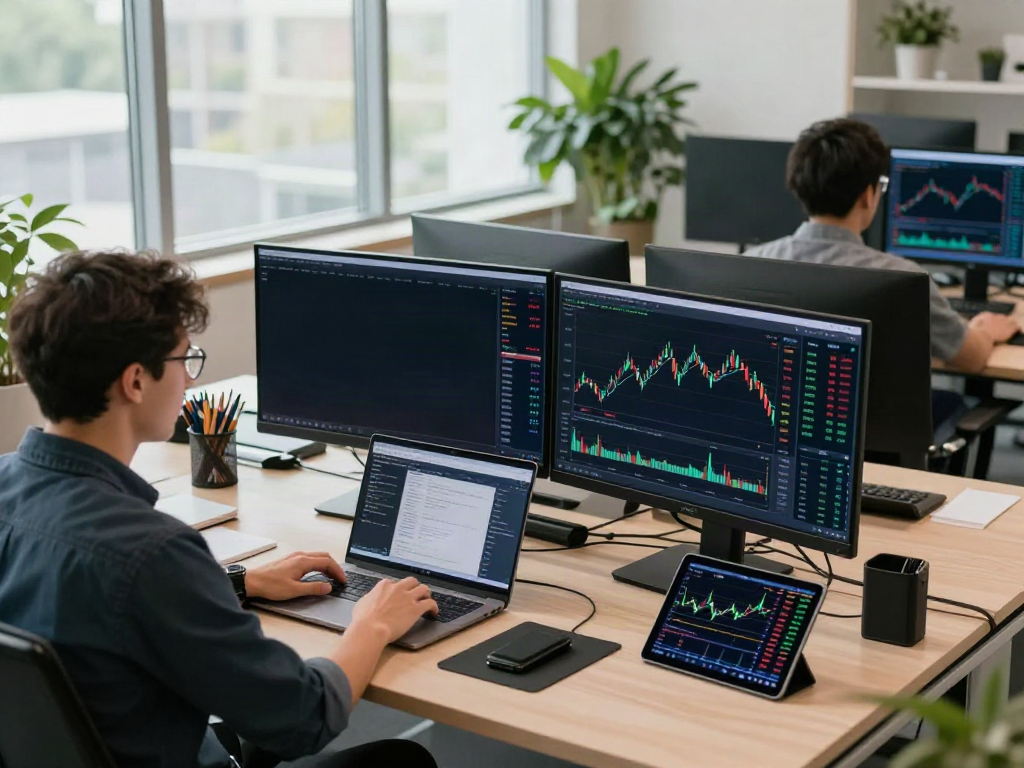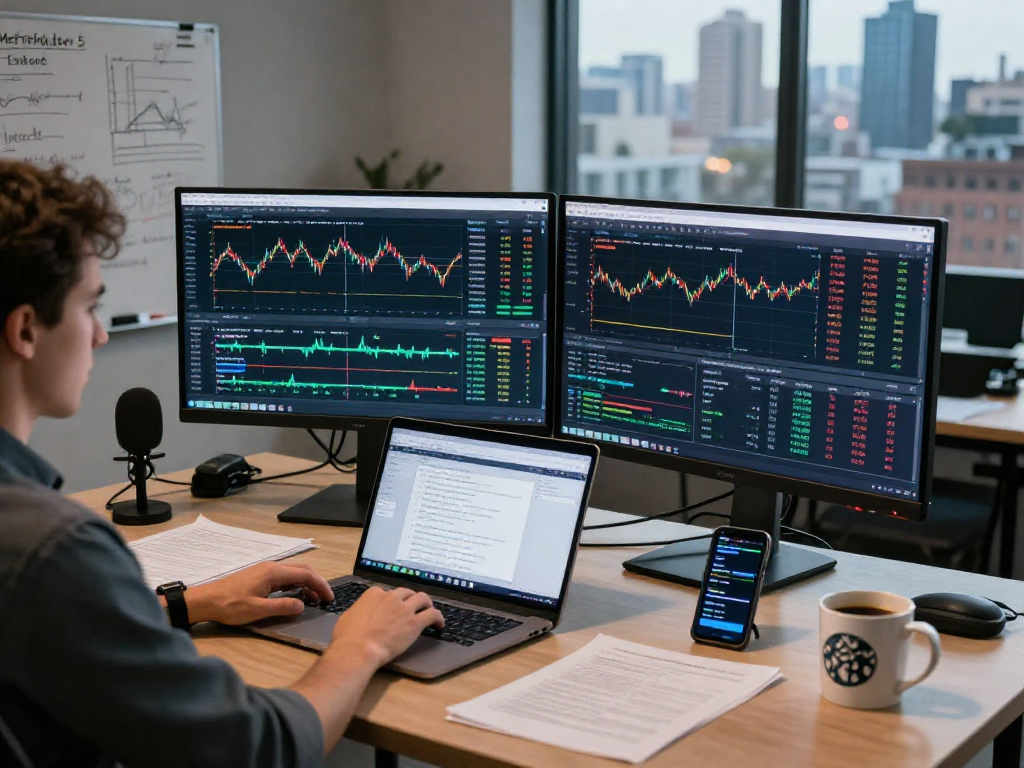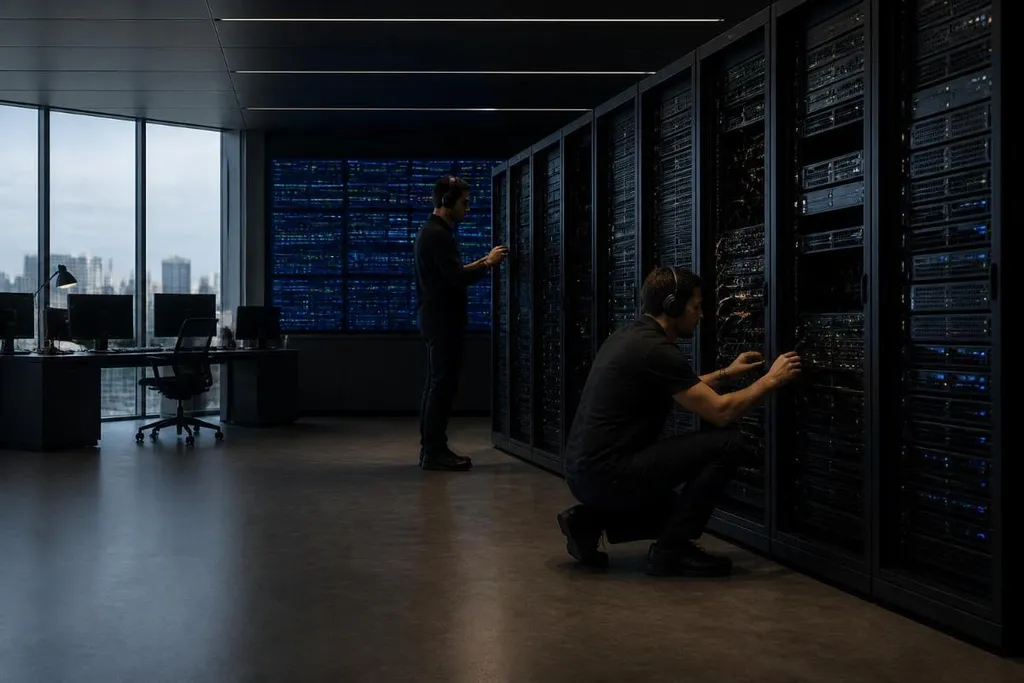
High-frequency trading is becoming more technically demanding as crypto markets mature. In 2026, automated systems are competing for increasingly small price differences, and the advantage often comes down to infrastructure rather than the trading idea itself.
A strategy can identify an opportunity perfectly and still lose it if the order arrives too late.
That is why exchange selection has become a serious decision for algorithmic traders. Latency, liquidity, API reliability, rate limits, execution quality and trading costs all have a direct impact on performance.
The search for the best crypto exchange for high frequency trading is therefore less about finding the exchange with the most coins and more about finding the venue that can consistently support an automated trading workflow.
Recent industry developments show exchanges putting more resources into professional infrastructure. Bitget, for example, has continued expanding its institutional API and liquidity offering during 2026, while reporting improvements to its trading technology and execution infrastructure.
Why HFT Has Become More Competitive
Crypto markets operate around the clock, creating opportunities for automated systems at almost any hour.
But the easy opportunities are becoming harder to find.
More trading firms and sophisticated individual traders now use bots to monitor order books, arbitrage price differences, provide liquidity and react to short-term market movements. As more algorithms compete for the same opportunities, execution speed becomes increasingly important.
There is another problem: costs.
A strategy that makes a tiny expected profit on each trade has very little room for expensive fees or slippage. A fraction of a percentage point can become meaningful when the number of transactions is extremely high.
High-frequency trading relies on sub-millisecond execution, robust APIs, and minimal fees. The guide to the best crypto exchange for high frequency trading evaluates platforms on latency, API quality, and fee structures, giving algorithmic traders a clear framework for choosing their infrastructure.
Bitget's 2026 Infrastructure Push
Bitget is one of the exchanges receiving increased attention from traders looking for professional and algorithmic infrastructure.
Its 2026 trading materials highlight institutional-grade API connections, a broad asset selection and low-latency execution. The exchange has also been expanding its institutional trading ecosystem beyond traditional cryptocurrency markets.
More recently, Bitget has highlighted its Universal Trading Account, liquidity infrastructure, APIs and cross-asset capabilities as part of its institutional offering. The exchange also reported more than $100 billion in TradFi Perps volume during August 2026 for the second consecutive month.
For an algorithmic trader, the important point isn't the headline volume by itself.
It's whether the infrastructure can handle the strategy's actual requirements.
API Performance Is the Starting Point
An HFT system communicates with an exchange through APIs.
That connection needs to be dependable.
Market data may arrive through WebSocket streams, while trading and account operations can use REST or other supported interfaces. The exact architecture depends on the strategy, but the objective is the same: receive useful market information quickly and send orders without unnecessary delay.
API latency is not just about the exchange.
Server location, network routing, connection quality and the trader's own software can all affect the final result. Research into crypto API latency in 2026 also points out that infrastructure needs to be considered as a complete stack rather than treating one latency figure as the whole story.
In simple terms, a fast exchange won't automatically make a slow bot fast.
Liquidity Can Matter More Than Speed
Speed gets most of the attention.
Liquidity deserves just as much.
An automated strategy needs executable prices. If the order book is thin, a large order can move through multiple price levels and create slippage. That can completely change the economics of a trade.
This is particularly important for market-making and arbitrage strategies.
Bitget's latest institutional material emphasizes executable liquidity and order-book depth, noting that professional traders need to understand how much size can actually be traded near the displayed price.
For HFT traders, this means looking at the specific pairs they trade rather than simply checking an exchange's total daily volume.
BTC/USDT may have excellent liquidity.
A smaller altcoin pair could be a very different story.
Trading Fees Add Up Quickly
HFT strategies often operate on small margins.
That makes fees critical.
Consider a strategy that executes thousands of trades. Even a small increase in the cost of each transaction can substantially reduce the strategy's net result.
Traders should therefore compare maker and taker fees, VIP structures, rebates, funding costs for derivatives, and any other expenses relevant to their strategy.
A low headline fee is useful, but it doesn't tell the complete story.
Suppose Exchange A has cheaper trading fees but significantly wider spreads. Exchange B charges slightly more but consistently delivers better execution.
Exchange B could ultimately be cheaper.
The only way to know is to measure actual trading costs.
Rate Limits Are Easy to Overlook
API rate limits can become a major issue when a bot is sending frequent requests.
If the strategy exceeds the permitted limits, requests can be throttled or rejected. During a fast market, that can be especially damaging.
Good HFT infrastructure should therefore account for rate limits from the beginning.
Developers can use WebSocket streams where appropriate instead of repeatedly polling endpoints for information that can be streamed in real time.
The strategy should also have sensible retry and error-handling logic.
A temporary API failure shouldn't cause the system to blindly send duplicate orders.
Exchange Reliability Matters
High-frequency systems don't stop being exposed to operational risk just because they're automated.
Quite the opposite.
An algorithm can continue attempting to trade while a human operator isn't watching closely. If market data becomes stale, connectivity breaks, or an order response behaves unexpectedly, the consequences can grow quickly.
This is why professional systems commonly include safeguards such as maximum position limits, order cancellation rules, connection monitoring and emergency shutdown mechanisms.
Security is equally important.
API keys should have only the permissions required by the strategy. If withdrawals aren't needed, there is little reason for a trading key to have withdrawal access.
The Broader 2026 Exchange Landscape
Bitget isn't the only exchange relevant to high-frequency trading.
Binance remains important because of its scale and liquidity, while OKX continues to attract advanced traders through its professional trading infrastructure and API access. Coinbase is also relevant for traders who prioritize institutional infrastructure and access to markets available through its ecosystem.
Industry comparisons in 2026 continue to emphasize liquidity, stable APIs, fees and execution quality when evaluating professional crypto exchanges.
The best choice depends on the strategy.
An arbitrage trader may care about different things than a market maker. A futures strategy may have completely different requirements from a spot-market system.
There isn't one universal winner.
How to Test an Exchange Before Going Live
Instead of choosing an exchange purely from an online ranking, HFT traders should test it.
Start with a small deployment.
Measure market-data latency.
Measure order acknowledgment times.
Track rejected orders.
Record slippage.
Calculate effective fees.
Monitor WebSocket disconnections.
Test what happens during sudden volatility.
These numbers give a much better picture than a marketing statement claiming that an exchange is "ultra-fast."
It also helps reveal weaknesses in the trader's own infrastructure.
Sometimes the exchange isn't the problem.
The server is.
Or the network.
Or the code.
Why 2026 Could Be Important for Algorithmic Trading
The crypto market is increasingly connecting with traditional financial markets through tokenized assets and derivatives.
Bitget, for example, says its rToken ecosystem includes hundreds of tokenized stocks and ETFs, while its TradFi Perps product provides exposure to stocks, indices, commodities and other traditional-market assets.
That creates a potentially broader environment for automated strategies.
Instead of monitoring only Bitcoin and Ethereum, sophisticated systems can increasingly analyze multiple asset classes from a single trading infrastructure.
For HFT developers, that's an interesting shift.
More markets can mean more opportunities.
It can also mean more complexity.
Final Thoughts
Finding the best crypto exchange for high frequency trading in 2026 requires looking beyond trading volume and the user interface.
API performance, liquidity, fees, rate limits, execution quality and reliability should all be evaluated together.
Bitget is one notable option to examine because of its continued investment in low-latency trading infrastructure, APIs, liquidity and institutional products. Other major exchanges, including Binance, OKX and Coinbase, can also be relevant depending on the trader's market access and strategy requirements.
For serious HFT traders, there is no substitute for testing.
Measure the latency.
Measure the fills.
Measure the costs.
Then make the decision.
In a market where thousands of automated systems are competing for increasingly small opportunities, consistency can matter just as much as raw speed.